40th Islamic Unity Conference wraps up in Mashhad with calls for regional resistance and solidarity
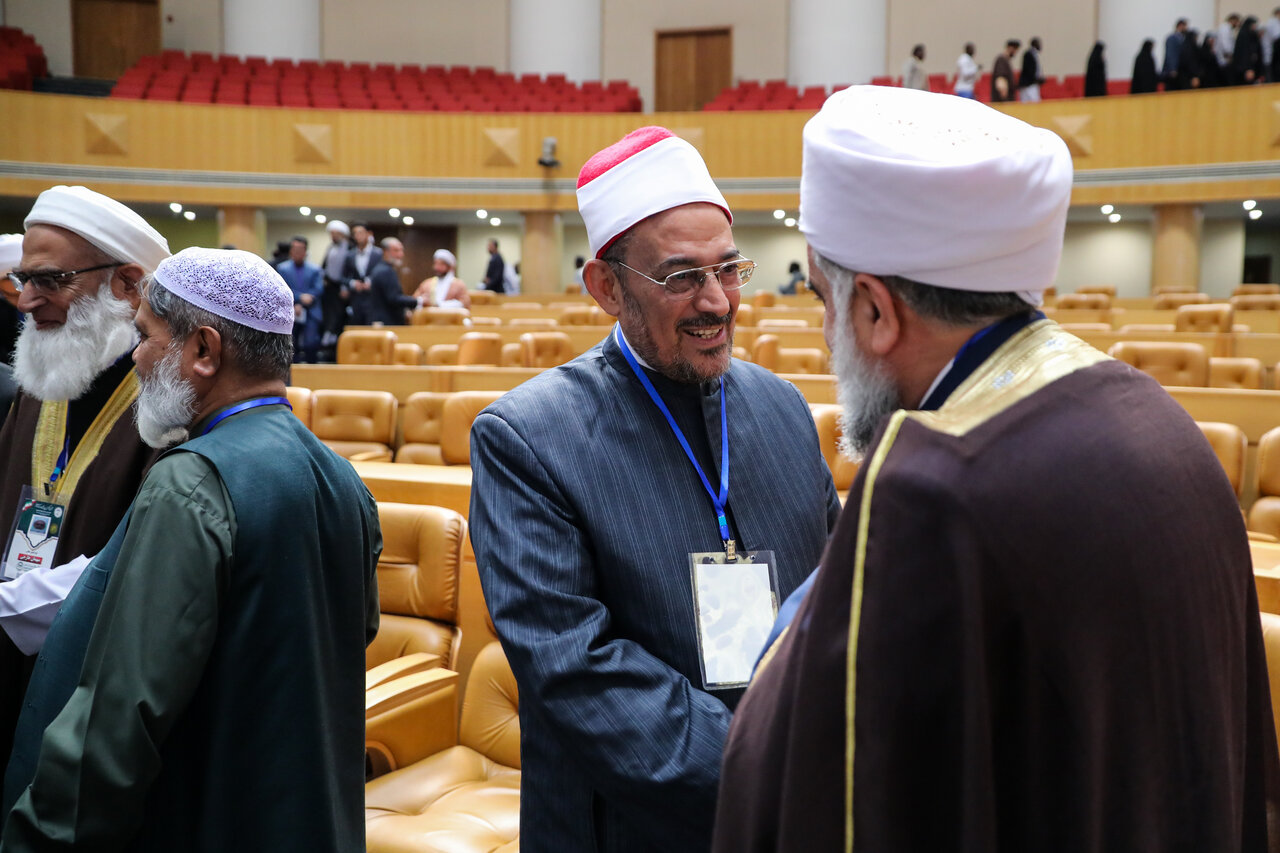
TEHRAN — The 40th International Conference on Islamic Unity concluded on Sunday in the northeastern city of Mashhad, bringing together hundreds of Muslim scholars, elites, and prominent Shia and Sunni figures from around 40 countries.
Held under the theme of Islamic unity in the thought of the late Leader, Ayatollah Seyyed Ali Khamenei, the four-day event served as a major platform calling for regional resistance, solidarity, and immediate action against foreign aggression.
Addressing the closing ceremony, Hujjat-ul-Islam Hamid Shahriari, Secretary General of the World Forum for Proximity of Islamic Schools of Thought, stressed that Iran’s successful model of Islamic unity is precisely why the US and Israel recently targeted the Islamic Republic. He highlighted a common mission of empowerment for all Islamic nations to stand firm against external enemies.
Shahriari outlined five foundational steps established over recent decades to promote unity:
-Developing a unified message and key concepts.
-Establishing the World Forum for Proximity of Islamic Schools of Thought.
-Creating an intellectual discourse among scholars and elites.
-Forming a network to cascade these discussions from elites into broader society.
-Encouraging society to actively act upon the message of unity.
He urged the Muslim world to form resistance mobilizations while jointly avoiding challenges like desecration, conflict, excommunication, and terrorism.
Throughout the conference—which opened on Thursday at the mausoleum of Imam Khomeini in Tehran before moving to Mashhad—speakers warned that failure to confront aggression in Palestine and Lebanon risks allowing threats to expand across the entire region.
Seyyed Hassan Khomeini, custodian of Imam Khomeini’s mausoleum, cautioned regional rulers against trusting US and Israeli motives. "If we do not stand against the Zionists, tomorrow Lebanon and Syria will not be the only fields of threat, and Saudi Arabia and Turkey will also be under their bayonets," he warned, emphasizing that unity must remain a permanent strategic principle rather than a temporary slogan.
Lebanese scholar Sheikh Hassan Baghdadi reinforced this strategic vision, pointing to historical victories in Lebanon and the central cause of Palestine as unifying pillars that transcend sectarian divisions. Furthermore, American Islamic thinker Mohammad al-Asi drew on Quranic teachings to remind delegates of their moral and spiritual duty to resist oppression, massacres, and ethnic cleansing.
Timed during Islamic Unity Week—celebrating the birth anniversary of Prophet Muhammad (PBUH)—the conference closed with a unified stance: sectarian rapprochement and practical solidarity are essential defenses against foreign dominance and regional destruction.
Leave a Comment